- +918330850504
- enquiry@blossomvalleytherapycentre.com
- Mon – Sat: 8:30 AM – 5:00 PM

- by admin
- July 20, 2026
- No Comments
Signs Your Child May Benefit from an Autism Therapy Centre Assessment
Every child grows and develops at their own pace. Some children begin talking early, enjoy social interaction, and quickly adapt to new environments, while others may require additional time and support to reach developmental milestones. Although individual differences are normal, persistent delays in communication, social interaction, behaviour, or learning may indicate the need for a professional developmental assessment.
Recognizing autism signs children display at an early stage allows families to access timely support and intervention. An assessment at a qualified autism therapy centre helps identify a child's strengths, challenges, and developmental needs while creating an individualized intervention plan that promotes long-term progress.
At Blossom Valley Therapy Centre, children receive comprehensive developmental evaluations from a multidisciplinary team that works closely with families to provide evidence-based care and personalized intervention programs. Early identification and early intervention autism therapy can significantly improve communication, social skills, behaviour, learning, and overall quality of life.
Why Early Assessment Is Important
Autism Spectrum Disorder (ASD) is a neurodevelopmental condition that affects how a child communicates, interacts with others, processes information, and responds to their environment. Every child with autism is unique, and symptoms can vary widely in type and severity.
Some children show noticeable developmental differences during infancy, while others display more subtle signs that become clearer during preschool or early school years.
An early assessment helps professionals understand whether developmental concerns are related to autism or another developmental condition. More importantly, it allows intervention to begin during the critical years of brain development, when children are most responsive to therapy.
Understanding Autism Signs in Children
Parents are often the first to notice changes or delays in their child's development. While experiencing one or two behaviours does not necessarily indicate autism, a combination of persistent developmental concerns should be evaluated by qualified professionals.
Common autism signs children may demonstrate include:
- Limited eye contact during communication.
- Delayed speech or language development.
- Difficulty responding to their name.
- Limited interest in social interaction.
- Preference for playing alone.
- Repetitive movements such as hand flapping, rocking, or spinning.
- Repeating words or phrases without meaningful communication.
- Difficulty understanding facial expressions or emotions.
- Strong attachment to routines.
- Becoming upset by small changes in daily activities.
Recognizing these behaviours early allows families to seek appropriate support before developmental gaps widen.
Communication Challenges
Communication difficulties are among the earliest indicators that may suggest the need for an assessment at an autism therapy centre.
Children may:
- Speak later than expected.
- Use very few words.
- Lose previously acquired language skills.
- Struggle to express their needs.
- Find conversations difficult.
- Repeat words instead of answering questions.
- Have limited use of gestures such as pointing or waving.
Because communication is essential for learning and social development, early support can make a meaningful difference.
Social Interaction Difficulties
Children naturally develop social skills through play and interaction. However, some children experience challenges engaging with others.
Parents may observe that their child:
- Avoids eye contact.
- Rarely smiles in response to others.
- Does not seek shared enjoyment.
- Shows limited interest in playing with peers.
- Has difficulty understanding social rules.
- Finds group activities overwhelming.
- Struggles to make or maintain friendships.
These challenges can affect both school participation and everyday relationships if left unaddressed.
Repetitive Behaviours and Restricted Interests
Many children enjoy routines, but children with autism may rely on routines to a much greater extent.
Examples include:
- Lining up toys repeatedly.
- Watching the same activity over and over.
- Becoming distressed when routines change.
- Focusing intensely on specific topics.
- Repetitive body movements.
- Repeating certain sounds or words.
While these behaviours vary between children, they may indicate the need for further developmental evaluation.
Sensory Processing Differences
Many children with autism process sensory information differently from their peers.
Some children may become overwhelmed by:
- Loud noises.
- Bright lights.
- Certain clothing textures.
- Food textures.
- Crowded environments.
Others may actively seek sensory input by:
- Jumping frequently.
- Spinning repeatedly.
- Touching objects constantly.
- Seeking deep pressure or movement.
Understanding sensory needs is an important part of creating an effective therapy plan.
When Should Parents Seek an Assessment?
Parents should not wait for concerns to "go away on their own." Early professional evaluation provides valuable information, even if autism is not diagnosed.
It is recommended to consult an autism therapy centre if a child:
- Has delayed speech.
- Rarely responds to their name.
- Shows limited social interaction.
- Avoids eye contact.
- Displays repetitive behaviours.
- Experiences developmental regression.
- Has unusual sensory responses.
- Struggles with age-appropriate communication.
Early assessment helps families understand their child's developmental profile and identify appropriate support services.
The Importance of Early Intervention Autism Therapy
Research consistently shows that early intervention autism therapy can significantly improve developmental outcomes. Starting therapy during the early years allows children to build essential skills while the brain is still rapidly developing.
Early intervention may help improve:
- Communication skills.
- Language development.
- Social interaction.
- Emotional regulation.
- Behaviour management.
- Play skills.
- Daily living skills.
- Learning readiness.
- Independence.
- Confidence.
Every child responds differently, but early support creates valuable opportunities for growth and development.
What Happens During an Autism Assessment?
A comprehensive autism assessment involves much more than observing a child's behaviour.
Professionals typically evaluate:
- Developmental history.
- Communication abilities.
- Social interaction.
- Behaviour patterns.
- Play skills.
- Sensory processing.
- Cognitive abilities.
- Adaptive functioning.
- Motor development.
The assessment may involve input from developmental paediatricians, psychologists, occupational therapists, speech-language pathologists, behavioural therapists, and special educators to ensure a complete understanding of the child's needs.
A Family-Centred Approach to Care
Parents are essential partners in every stage of intervention. Effective therapy extends beyond clinic sessions by providing families with practical strategies that support learning at home, school, and within the community.
Ongoing collaboration between therapists and parents helps children practice new skills consistently, leading to better long-term outcomes.
Why Choose Blossom Valley Therapy Centre?
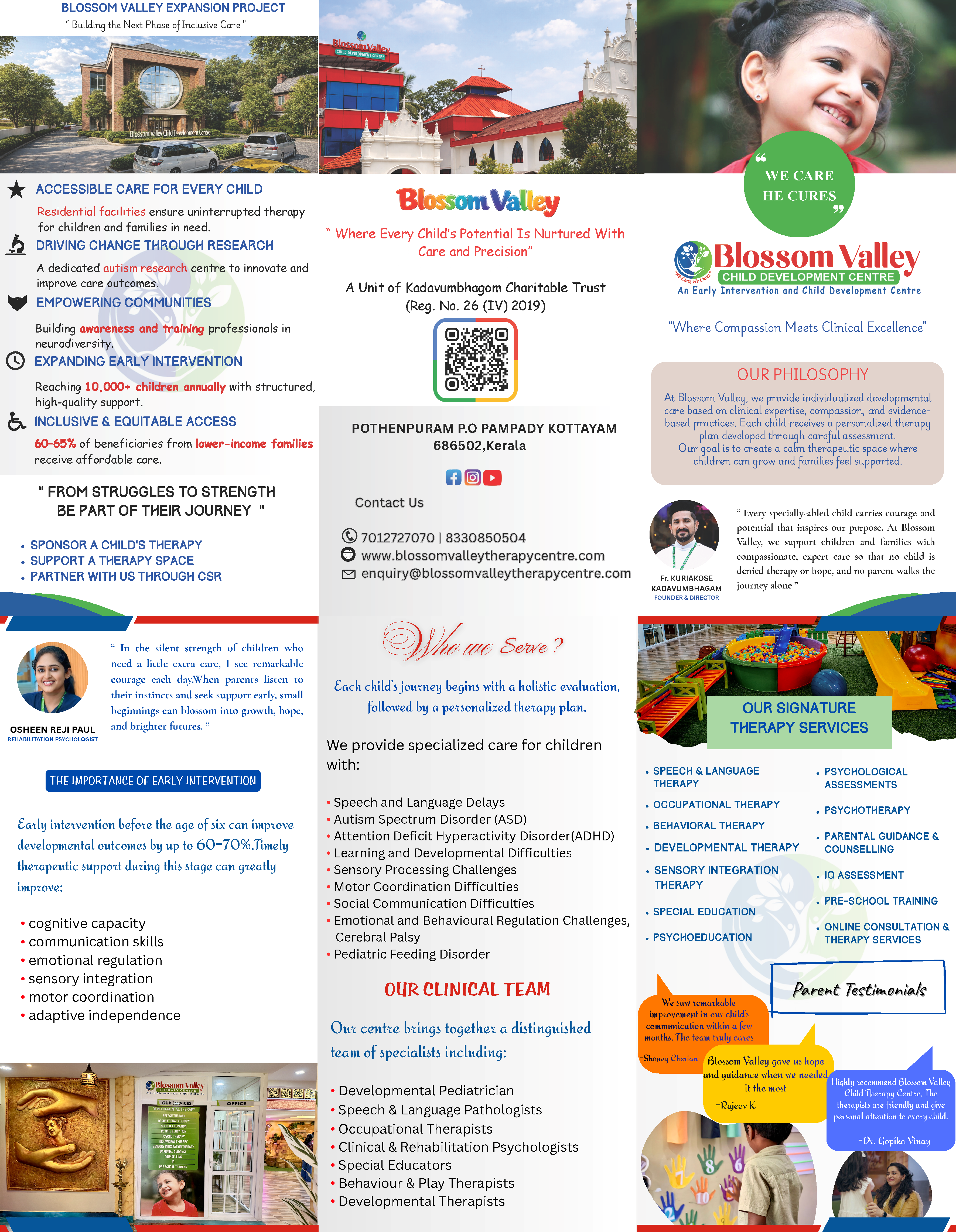
Blossom Valley Therapy Centre provides comprehensive developmental assessments and individualized intervention programs for children with autism and other developmental conditions. As a trusted autism therapy centre, the centre offers multidisciplinary care that includes developmental paediatric consultation, occupational therapy, speech and language therapy, behaviour therapy, psychological services, sensory integration therapy, special education, and parent guidance.
Children are assessed using evidence-based approaches that help identify autism signs children may present while creating personalized treatment plans focused on communication, learning, behaviour, and independence. Through compassionate care and early intervention autism therapy, Blossom Valley Therapy Centre supports children and families in achieving meaningful developmental progress and improved quality of life.
FAQs
Q: When should I visit an autism therapy centre?
If your child has persistent delays in communication, social interaction, behaviour, or development, a professional assessment can help identify their needs and recommend appropriate support.
Q: What are common autism signs children may show?
Common signs include delayed speech, limited eye contact, repetitive behaviours, difficulty with social interaction, unusual sensory responses, and strong dependence on routines.
Q: Why is early intervention autism therapy important?
Early intervention supports brain development and can improve communication, behaviour, social skills, learning, and independence during the most critical developmental years.
Q: Can a child improve with early autism intervention?
Many children make significant progress with individualized therapy, family involvement, and consistent intervention tailored to their developmental needs.